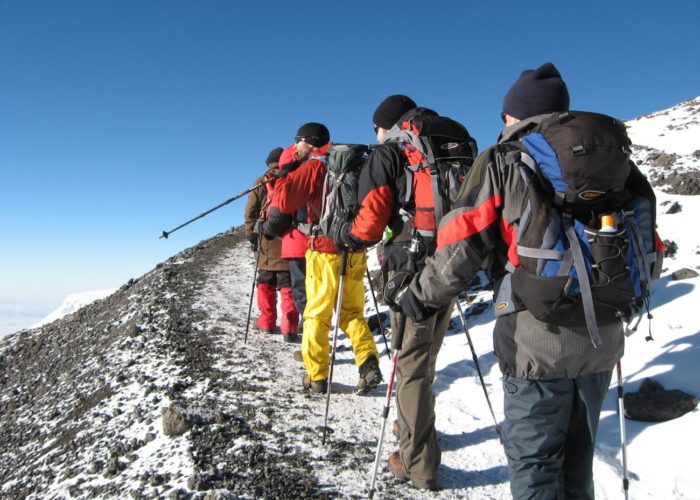
Climbing Kilimanjaro takes between 5 and 9 days, but that range hides the single most important decision in planning your climb: the number of days you choose doesn’t just affect your schedule and budget — it’s the biggest factor determining whether you actually reach the summit. This guide breaks down exactly how many days each route takes, what the data says about success rates by duration, and how to choose the right length for your fitness, budget, and risk tolerance.
Most climbers should plan for 7 to 9 days on the mountain. Shorter 5- or 6-day itineraries are legal and offered by every operator, but they carry meaningfully lower summit success rates because they don’t allow enough time for your body to acclimatize to the altitude. Longer isn’t just “safer” as a vague idea — it’s the single variable most within your control that changes your actual odds of standing on Uhuru Peak.
Kilimanjaro is not a technical climb — no ropes, no climbing skills required. The reason roughly one in three to one in five climbers fails to summit isn’t fitness or willpower; it’s altitude sickness. Above about 3,000 meters, your body needs time to adjust to reduced oxygen, and that adjustment happens on a biological timeline that no amount of gym training can speed up. This is why route length is treated by experienced operators as a safety decision, not just a scheduling one.
Kilimanjaro has seven official routes to the summit, and each has both a minimum duration and a recommended (longer, safer) duration. Here’s the full breakdown:
| Route | Typical Days | Recommended Days | Summit Success Rate |
|---|---|---|---|
| Marangu | 5 days | 6–7 days | ~27% (5-day) / 80%+ (6–7 day) |
| Umbwe | 4–5 days | 6–7 days | ~60–70% |
| Machame | 6 days | 7 days | ~85% |
| Rongai | 6 days | 7 days | ~80% |
| Shira | 6 days | 7 days | ~70–75% |
| Lemosho | 7 days | 8 days | ~90% |
| Northern Circuit | 8–9 days | 9–10 days | 90%+ |
A few things worth understanding about this table:
Almost every “Kilimanjaro success rate” figure you’ll find online traces back to a single dataset: numbers attributed to the Kilimanjaro National Park Authority (KINAPA) from 2006, breaking down success by number of days on the mountain rather than by named route:
| Days on Mountain | Reported Success Rate |
|---|---|
| 5 days | ~27% |
| 6 days | ~44% |
| 7 days | ~64% |
| 8 days | ~85% |
| 9 days | No data (route didn’t exist yet) |
| All routes, all durations | ~45% overall |
This data is worth using with two important caveats. First, it’s roughly twenty years old and has never been officially updated or re-published by the park authority itself. Second, at the time it was collected, most climbers were on fast 5-day itineraries and equipment/guiding standards were generally lower — both of which likely made success rates look worse across the board than a comparable climb would today. Most current operators estimate the modern overall success rate sits somewhere between 65% and 80%, reflecting better-informed route choices, improved gear, and more operators defaulting to longer itineraries. Even accounting for that upward revision, the underlying pattern holds firm across every dataset available: more days on the mountain reliably means a meaningfully higher chance of reaching the summit.
This is the minimum realistic window, and it comes with the lowest success rates on the mountain. Only consider this if you’re an experienced high-altitude climber who has successfully acclimatized on comparable peaks before, or if you’re doing the hut-based Marangu route specifically for its lower physical demand (accepting the tradeoff in summit odds).
This is the practical minimum most reputable operators now recommend. A 7-day Machame or Rongai gives you one dedicated acclimatization day built into the schedule, pushing success rates from the 60% range up toward 80–85%.
This is the sweet spot recommended by most experienced guiding companies: an 8-day Lemosho or 9-day Northern Circuit gives your body genuine time to adjust via a “climb high, sleep low” profile, where you ascend to a higher altitude during the day and descend to sleep lower, training your body’s oxygen response gradually. Success rates in this range climb above 90%.
Beyond 9–10 days, additional time offers diminishing returns for most healthy climbers — success rates are already very high by day 9, and extra days mainly add cost, physical fatigue from extended trekking, and logistical complexity rather than a meaningfully higher summit chance. The exception is climbers who know they acclimatize slowly, have had altitude issues before, or want a genuine contingency buffer built in for weather delays.
More days on the mountain isn’t free, and it’s worth understanding what you’re paying for when you upgrade from, say, a 6-day to an 8-day Machame:
Despite the added cost, most experienced operators consider one or two extra days one of the best investments in the entire trip, given how directly it correlates with actually reaching the summit you traveled here for.
Understanding why extra days help requires understanding what’s actually happening physiologically. As you climb above roughly 2,500–3,000 meters, reduced atmospheric oxygen forces your body to adapt — producing more red blood cells, adjusting breathing patterns, and stabilizing blood pressure. This process, called acclimatization, simply takes time; it cannot be rushed by fitness, willpower, or training.
Symptoms of Acute Mountain Sickness (AMS) — headache, nausea, dizziness, fatigue, loss of appetite — are your body’s warning signs that you’re ascending faster than it can adapt. On short itineraries, climbers frequently push through mild AMS symptoms because there’s no schedule buffer to rest, which is exactly how mild symptoms progress into the more serious, sometimes life-threatening conditions of High Altitude Cerebral Edema (HACE) or High Altitude Pulmonary Edema (HAPE).
Longer itineraries build in exactly the buffer that shorter ones don’t: a spare day to rest if you’re feeling the altitude, rather than being locked into a fixed summit-night schedule regardless of how you’re feeling.
6-day Machame (fast version)
Day 1: Machame Gate to Machame Camp · Day 2: Shira Camp · Day 3: Barranco Camp · Day 4: Barafu Camp · Day 5: Summit + descent to Mweka Camp · Day 6: Mweka Gate
7-day Machame (recommended version)
Adds one extra acclimatization day at Barranco Camp (the “climb high, sleep low” day via the Lava Tower), directly improving oxygen adaptation before the summit push.
8-day Lemosho
Day 1–2: Londorossi Gate through rainforest to Shira Camp · Day 3: Shira Plateau · Day 4: Lava Tower and Barranco Camp (acclimatization) · Day 5: Karanga Camp · Day 6: Barafu Camp · Day 7: Summit + descent to Mweka Camp · Day 8: Mweka Gate
9-day Northern Circuit
Follows a similar early structure to Lemosho, then diverges to circle the mountain’s remote northern slopes, adding an extra 1–2 days of gradual altitude gain before rejoining the standard summit-night route via Barafu or School Hut.
What is the minimum number of days to climb Kilimanjaro?
Most operators offer a minimum of 5 days (via the Marangu route), though this carries the lowest summit success rate of any standard itinerary due to insufficient acclimatization time.
How many days should a beginner take to climb Kilimanjaro?
First-time climbers with no prior high-altitude experience should plan for at least 7 days, and ideally 8–9 days, to maximize both safety and summit success rate.
Does more days on Kilimanjaro guarantee I’ll reach the summit?
No — success also depends on your fitness, health, pacing, and how your individual body responds to altitude. However, data consistently shows that more days on the mountain meaningfully raises the probability of summiting compared to a shorter itinerary on the same route.
What is the best route and day-length combination for most climbers?
The 8-day Lemosho route is widely considered the best overall balance of scenery, moderate crowd levels, and a strong acclimatization profile, with success rates typically cited around 90%.
Is a 5-day Kilimanjaro climb a bad idea?
It’s not recommended for most climbers. The 5-day Marangu itinerary has one of the lowest reported success rates of any standard route due to a compressed acclimatization schedule, and is generally suited only to experienced, pre-acclimatized climbers.
How many extra days should I add for acclimatization?
Adding just one extra day to a route’s minimum duration (for example, 6 days instead of 5, or 7 instead of 6) produces a significant jump in reported success rates, making it one of the highest-value changes you can make to a Kilimanjaro itinerary.
Do longer Kilimanjaro climbs cost significantly more?
Yes — each additional day adds park fees, guide and porter wages, and supplies, typically increasing the total trek cost by roughly 12–18% per extra day, though most operators and climbers consider it worthwhile given the corresponding increase in summit success rate.
A note on the data in this guide: the most commonly cited success-rate figures by day count come from a 2006 KINAPA dataset that hasn’t been officially updated since, so treat the exact percentages as directional rather than precise — the relationship between more days and higher success is well-supported across independent sources, even if the specific numbers vary by operator and are likely conservative compared to modern outcomes. Worth keeping a “figures based on historical park data” note visible if publishing this, since it’s exactly the kind of nuance that builds trust with both readers and AI answer engines.
Want this tailored to a specific brand — Ngotea, Blessing Safaris, or another — with your own quoted Kilimanjaro package days/prices and internal links, turned into a publish-ready page?
There are no results matching your search
WhatsApp us