There’s no single correct answer to “Tanzania or Kenya,” and any guide that gives you one is oversimplifying a genuinely close call. Both countries share the same wildlife-rich ecosystem, the same Great Migration, and comparably world-class guiding. The real question isn’t which country is objectively better — it’s which country’s strengths match your trip length, budget, and priorities. This guide breaks down every factor honestly so you can make that call yourself.
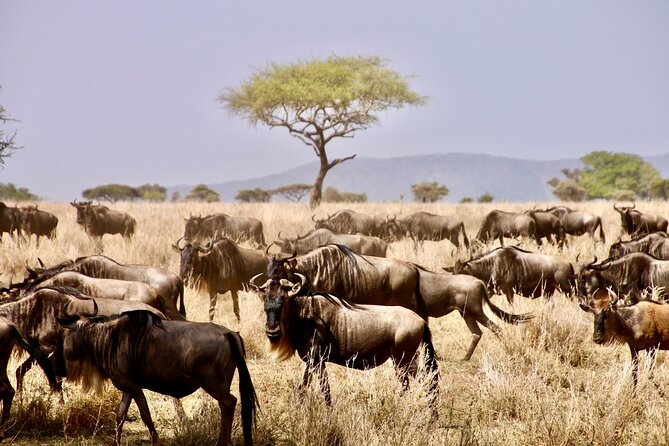
The Serengeti and the Maasai Mara are not two separate wildlife destinations — they’re one continuous, transboundary ecosystem. Roughly two million wildebeest, plus hundreds of thousands of zebras and gazelles, migrate in a single unbroken loop across the invisible border between Tanzania and Kenya. The animals cross freely. Travelers, visas, and park fees do not.
That single fact is why this decision is confusing: you’re not choosing between different wildlife. You’re choosing between different access points, park systems, trip lengths, crowd patterns, cost structures, and travel styles built around the same underlying ecosystem.
Choose Kenya if:
Choose Tanzania if:
Kenya is generally the cheaper of the two countries for a comparable trip, and the price gap widens as you move up the luxury tiers.
| Tier | Kenya | Tanzania |
|---|---|---|
| Mid-range (per night) | $350–$750 | $400–$800 |
| Luxury (per night) | $750–$1,500+ | $800–$1,600+ |
| Park/conservation fees | ~$100–$200/day | ~$110–$160/day + vehicle fees |
At the budget-to-mid-range level, the difference is modest. At the luxury end, however, Tanzania’s overall trip cost tends to run 15–30% higher than an equivalent Kenya itinerary, largely because:
A concrete example: a 5-day Maasai Mara trip at a mid-range lodge (Mara Serena, Keekorok, Sarova Mara) runs roughly $1,800–$2,500 per person, full board with game drives included, plus around $400 return for internal flights from Nairobi’s Wilson Airport. Stepping up to a private Mara conservancy (Mara Plains, Kicheche, Porini) pushes the same five nights to $4,500–$7,000 per person — you’re paying for exclusivity, walking safaris, night drives, and strict bed-density limits per conservancy that Tanzania’s national parks don’t generally offer at the same scale.
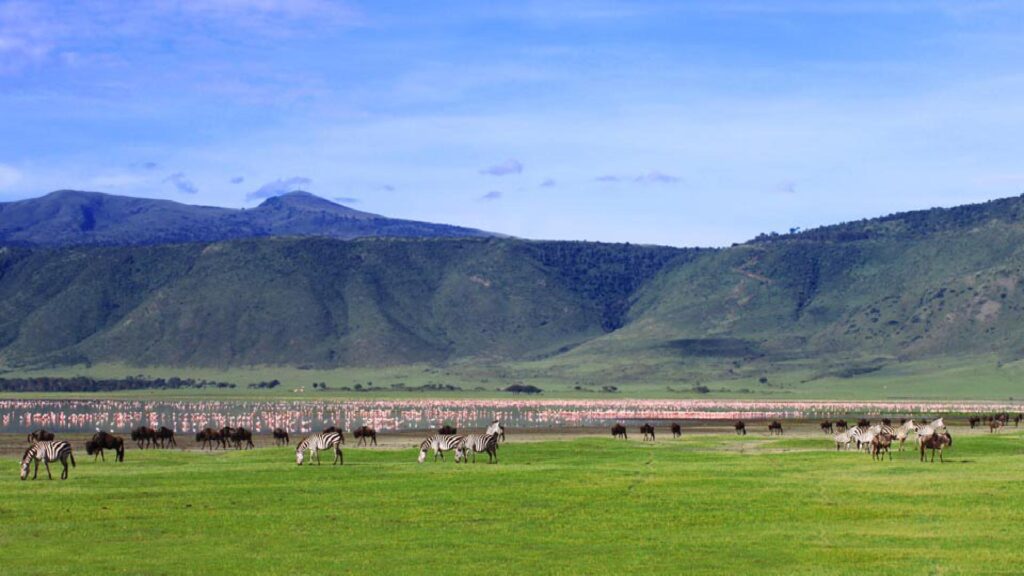
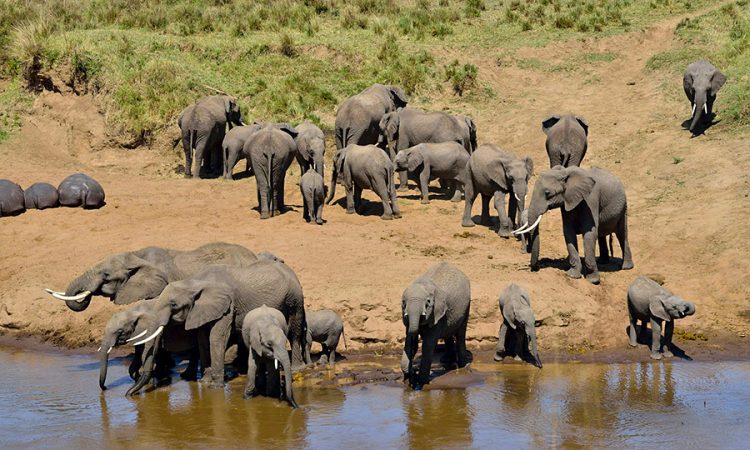
Tanzania has dedicated an estimated 38% of its land to conservation — the highest proportion of any African nation — resulting in some of the largest protected wilderness areas on the continent. The Serengeti alone covers nearly 15,000 square kilometers, roughly ten times the size of the Maasai Mara, and holds an estimated 4 million wild animals across Tanzania’s park system.
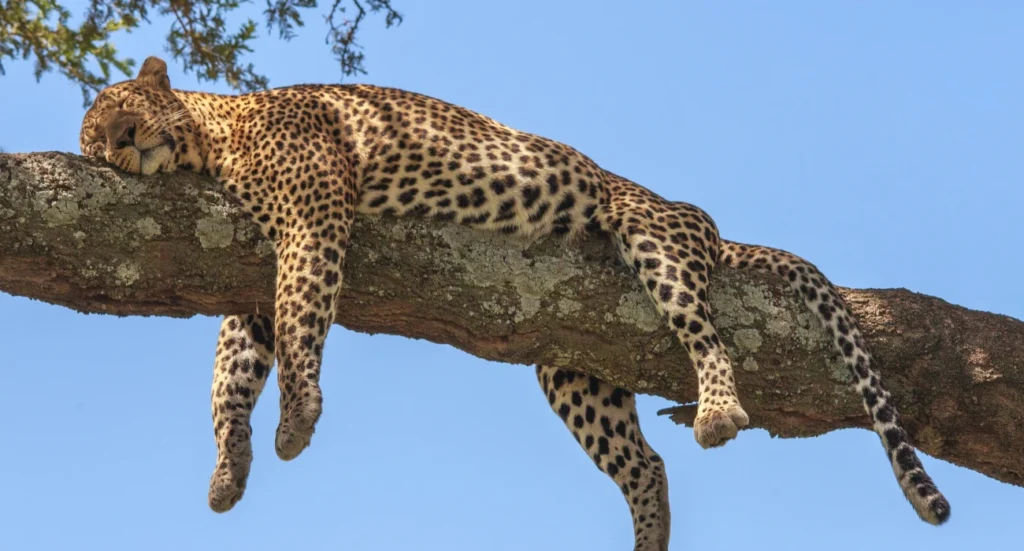
Kenya’s parks are smaller and more numerous, which has a real practical benefit: wildlife density per square kilometer is often higher, and short game drives can produce more concentrated sightings without the driving distances required in Tanzania’s much larger parks. Kenya’s Maasai Mara in particular is known for East Africa’s highest big-cat density.
The tradeoff is atmosphere. Kenya’s more compact, more accessible parks — combined with a longer-established tourism industry — mean more vehicles congregating around major sightings during peak season. Tanzania’s vast, open-access parks generally deliver a more remote, cinematic, less-crowded feel, simply because there’s more space to spread across.
This is the single most misunderstood factor in the Kenya-vs-Tanzania decision. The migration isn’t an event you either “catch” or “miss” in one country — it’s a year-round loop that spends different months in different places:
This means Kenya’s marquee migration season (the Mara River crossings, roughly July–October) is genuinely the best month-specific window if that exact spectacle is your goal. But Tanzania hosts some phase of the migration in the wider Serengeti ecosystem for most of the year, including the calving season that Kenya doesn’t get at all. Neither country “has” the migration exclusively — they each own different, non-overlapping chapters of the same story.
Kenya’s more compact geography and Nairobi’s strong domestic flight network make it easier to see multiple distinct parks (Maasai Mara, Amboseli, Lake Nakuru, Ol Pejeta) in a shorter trip without losing days to long road transfers. This makes Kenya the more forgiving choice for travelers with 5–7 days who still want to combine more than one park or wildlife focus.
Tanzania rewards more time. Its parks are farther apart and considerably larger individually, so a rushed Tanzania itinerary tends to feel like driving through impressive scenery rather than actually experiencing it. Most experienced operators recommend 8–10+ days to properly cover the Northern Circuit (Tarangire, Serengeti, Ngorongoro) without feeling hurried, and even longer if a Southern Circuit park or Zanzibar extension is added.
If a specific animal is your priority rather than the general safari experience, that can settle the decision on its own:
This is one of the more structural differences between the two countries. Kenya has developed an extensive network of private conservancies bordering its national reserves — smaller, exclusive-use areas with strict guest limits, permitting off-road driving, night drives, and walking safaris that aren’t allowed inside the national reserves themselves.
Tanzania has fewer private conservancies by comparison, though notable exceptions exist (Grumeti, Mwiba, and concessions like Klein’s Camp bordering the Serengeti). Most of Tanzania’s premium wildlife viewing happens inside open-access national parks, which means more vehicles can converge on a single sighting, but also means a broader range of accommodation options at every price point without needing to book into a specific conservancy.
One meaningful, often underweighted factor: Tanzania offers a natural, short-flight beach extension in Zanzibar that pairs a safari with genuine tropical relaxation in a way Kenya’s coastal alternatives (Diani Beach, Watamu) don’t quite match in terms of seamless logistics from the main safari circuit. For travelers who want “safari plus beach” as a single trip, this tips meaningfully toward Tanzania, or toward a combined itinerary that does Kenya’s Mara and then flies into Zanzibar via a connecting route.
A growing number of travelers, especially those on longer or once-in-a-lifetime trips, simply combine both countries rather than choosing — flying between Nairobi and Arusha or Kilimanjaro to experience the Mara’s river crossings and the Serengeti’s scale and Ngorongoro Crater in one continuous journey. This is genuinely the most complete way to experience the migration ecosystem as a whole, since it captures phases of the migration that neither country offers alone. It requires more time (typically 10–14+ days) and a higher overall budget, but removes the either/or entirely for travelers who can accommodate it.
| Traveler Profile | Better Fit |
|---|---|
| First-time safari-goer, 5–7 days, budget-conscious | Kenya |
| Wants the Mara River crossing specifically (Jul–Oct) | Kenya |
| Wants calving season and newborn wildlife (Jan–Mar) | Tanzania |
| Wants Ngorongoro Crater’s dense, compact wildlife viewing | Tanzania |
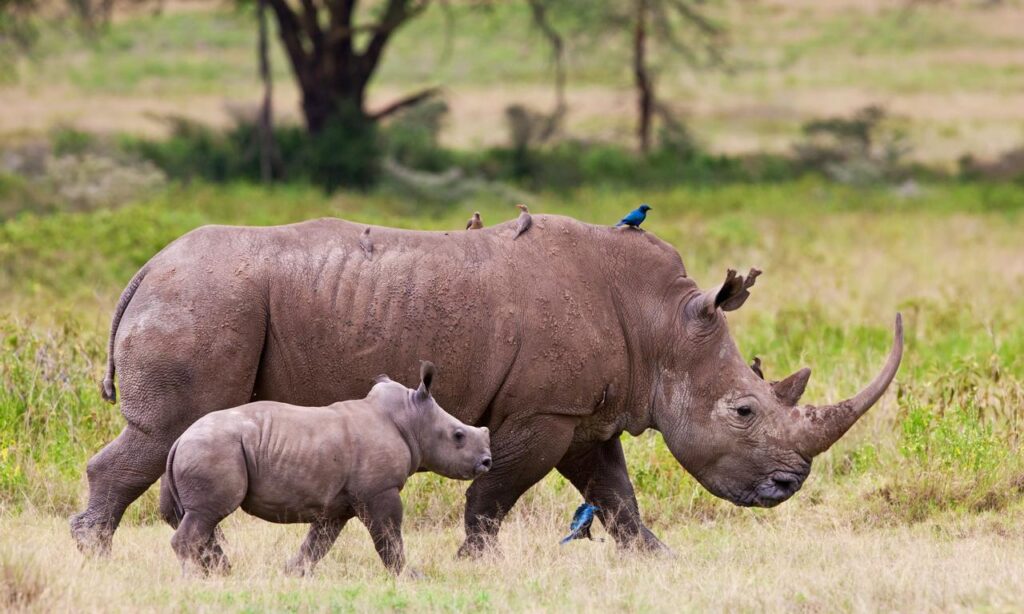
| Wants rhino sightings as a priority | Kenya |
| Wants chimpanzee tracking | Tanzania |
| Wants a seamless safari-plus-beach trip | Tanzania (via Zanzibar) |
| Has 10+ days and wants the full migration story | Both, combined |
| Prioritizes private conservancy access, off-road driving | Kenya |
| Prioritizes vast, uncrowded, cinematic wilderness | Tanzania |
Is Tanzania or Kenya better for a first safari?
Kenya is generally considered the easier first-time safari choice, thanks to shorter distances, strong domestic flight connectivity from Nairobi, and typically lower overall costs for a 5–7 day trip.
Is Tanzania more expensive than Kenya?
Generally, yes, particularly at the luxury end and for multi-region itineraries — Tanzania’s higher park fees and larger geography (sometimes requiring internal flights) typically make an equivalent trip 15–30% more expensive than Kenya.
Where is the Great Migration better: Kenya or Tanzania?
Neither country has exclusive access to the migration — it’s a year-round loop. Kenya offers the dramatic Mara River crossings from roughly July to October, while Tanzania hosts other phases of the migration for most of the rest of the year, including the January–March calving season that Kenya doesn’t experience at all.
Which country has better wildlife density?
Kenya’s more compact parks, particularly the Maasai Mara, generally offer higher wildlife density per square kilometer and are known for the highest big-cat concentration in East Africa. Tanzania’s larger parks spread wildlife over more territory but hold a greater total wildlife population overall.
Can I visit both Kenya and Tanzania on one trip?
Yes, and many travelers do exactly this — flying between Nairobi and Arusha or Kilimanjaro to experience both the Mara’s river crossings and the Serengeti/Ngorongoro circuit in a single 10–14+ day itinerary.
Which country is better for a safari and beach combination?
Tanzania has the logistical edge here, since Zanzibar is a short domestic flight from the Northern Circuit safari region, making a seamless safari-plus-beach trip easier to arrange than Kenya’s coastal alternatives.
Is Tanzania or Kenya better for seeing rhinos?
Kenya generally has the advantage for rhino sightings, with dedicated, well-established sanctuaries at Ol Pejeta Conservancy and Lake Nakuru National Park offering more reliable viewing odds than most Tanzania parks.
There are no results matching your search
WhatsApp us