Africa is home to some of the world’s most remarkable wildlife destinations, but two places that consistently stand out among safari travellers are Kenya’s Masai Mara National Reserve and Tanzania’s Serengeti National Park. Both are famous for their abundant wildlife, spectacular landscapes, large predator populations and the annual Great Wildebeest Migration.
If you are planning an African safari, you may be wondering whether to visit Masai Mara or Serengeti. Which destination offers better wildlife viewing? Where are you more likely to witness the Great Migration? Which is better for spotting lions, leopards and cheetahs? And should you choose Kenya or Tanzania for your next safari?
Although these two destinations are part of the same greater Serengeti-Mara ecosystem, they offer different safari experiences. Masai Mara is particularly famous for its high wildlife concentration and dramatic river crossings, while Serengeti offers a much larger wilderness area with diverse landscapes and year-round wildlife experiences.
In this guide, we compare Masai Mara vs Serengeti to help you understand their differences and choose the best destination for your African safari.
Masai Mara and Serengeti are located in East Africa, with Masai Mara in southwestern Kenya and Serengeti in northern Tanzania. They share an extensive ecosystem that supports millions of migrating animals and numerous resident wildlife species.
Masai Mara National Reserve is a protected wildlife area in Kenya covering approximately 1,510 square kilometres. It is famous for its open grasslands, large populations of lions, leopards and cheetahs, and the spectacular Mara River crossings during the Great Wildebeest Migration.
The wider Greater Mara ecosystem also includes community conservancies surrounding the national reserve, providing additional wildlife habitats and different safari experiences.
Serengeti National Park is located in northern Tanzania and covers approximately 14,750 square kilometres. It is one of Africa’s most celebrated wildlife destinations, known for its endless plains, abundant predators, diverse landscapes and the annual movement of wildebeests and zebras.
One important difference is their size. Serengeti is considerably larger than Masai Mara, allowing visitors to explore different wildlife regions and landscapes during a longer safari.
Although both destinations share wildlife populations and migration routes, their geographical size, management systems and safari experiences make each one unique.
Here is a quick comparison of the main differences between these two famous African safari destinations.
| Feature | Masai Mara | Serengeti |
|---|---|---|
| Country | Kenya | Tanzania |
| Protected area | National Reserve | National Park |
| Size | Approximately 1,510 km² | Approximately 14,750 km² |
| Landscape | Open grasslands and river systems | Vast plains, woodlands, kopjes and rivers |
| Famous for | Mara River crossings | Great Wildebeest Migration |
| Big Five | Excellent viewing opportunities | Excellent viewing opportunities |
| Big cats | Excellent lion, leopard and cheetah viewing | Excellent lion, leopard and cheetah viewing |
| Safari duration | 2–4 days or longer | 3–6 days or longer |
| Best migration period | Generally July–October | Migration experiences throughout the year |
| Accommodation | Luxury lodges, tented camps and conservancy camps | Luxury lodges, permanent and mobile tented camps |
| Best for | Concentrated wildlife viewing and river crossings | Extended safaris and following migration movements |
Both destinations offer outstanding wildlife experiences, but the best choice depends on your travel dates, interests, available time and preferred safari style.
Wildlife is the main reason travellers visit both Masai Mara and Serengeti. Fortunately, neither destination disappoints when it comes to animal encounters.
Masai Mara is particularly famous for its high concentration of wildlife across relatively open landscapes. Its grasslands provide excellent visibility, making it easier to spot animals during game drives.
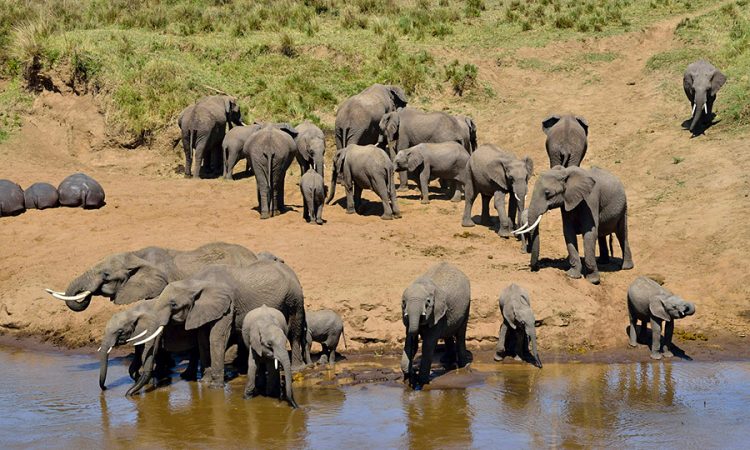
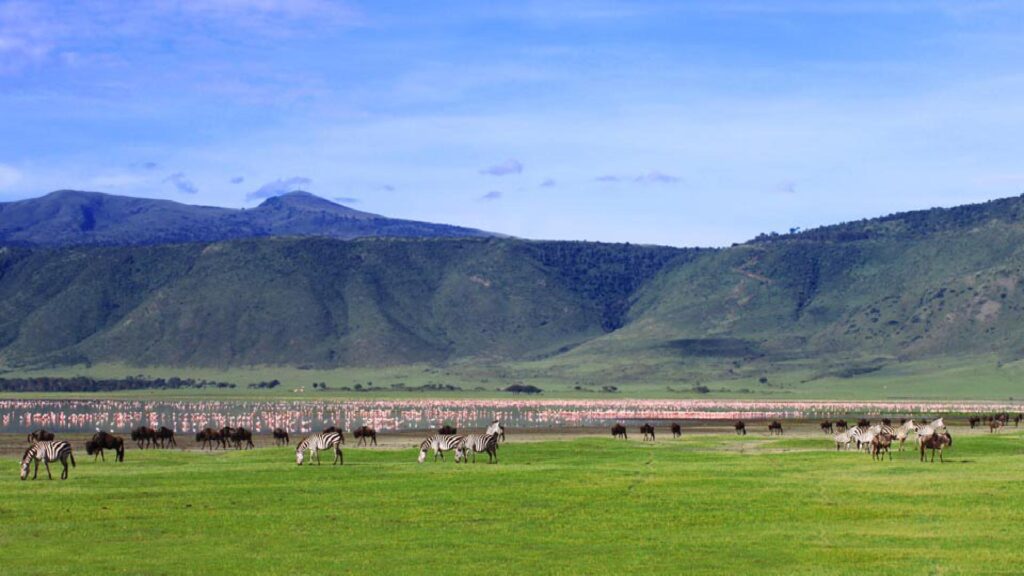
Visitors can encounter large herds of wildebeests, zebras, elephants, buffaloes, giraffes and different antelope species.
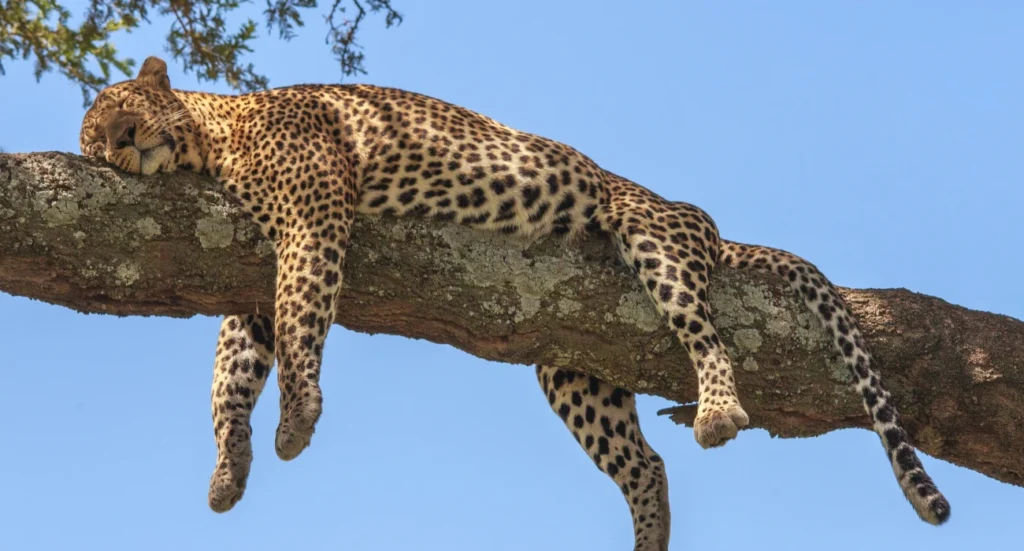
The reserve is also famous for its predators. Lions are regularly encountered across different areas, while leopards can be spotted resting in trees or moving through riverine vegetation. Cheetahs are particularly associated with the open plains, where they can hunt their preferred prey.
The concentration of animals makes Masai Mara an excellent destination for travellers who want rewarding wildlife encounters within a relatively short safari.
Serengeti supports an extraordinary diversity of wildlife across its enormous protected landscape.
Its different regions provide habitats for lions, leopards, cheetahs, elephants, giraffes, buffaloes, hyenas, zebras, wildebeests and numerous other species.
One of Serengeti’s biggest attractions is its large predator population. The central Serengeti, particularly the Seronera region, is famous for excellent big cat viewing throughout the year.
The park’s size also creates opportunities to explore different habitats, from open grasslands and rocky kopjes to river valleys and woodland areas.
Unlike Masai Mara, wildlife encounters in Serengeti can vary considerably depending on the region you visit. However, this diversity is part of what makes exploring the park so rewarding.
Which is better for wildlife viewing?
Masai Mara is excellent for concentrated wildlife viewing and spotting predators across open plains. Serengeti offers a larger variety of habitats and more opportunities for extended wildlife exploration.
Both are outstanding destinations for a wildlife safari.
The Great Wildebeest Migration is one of the biggest reasons travellers compare Masai Mara and Serengeti.
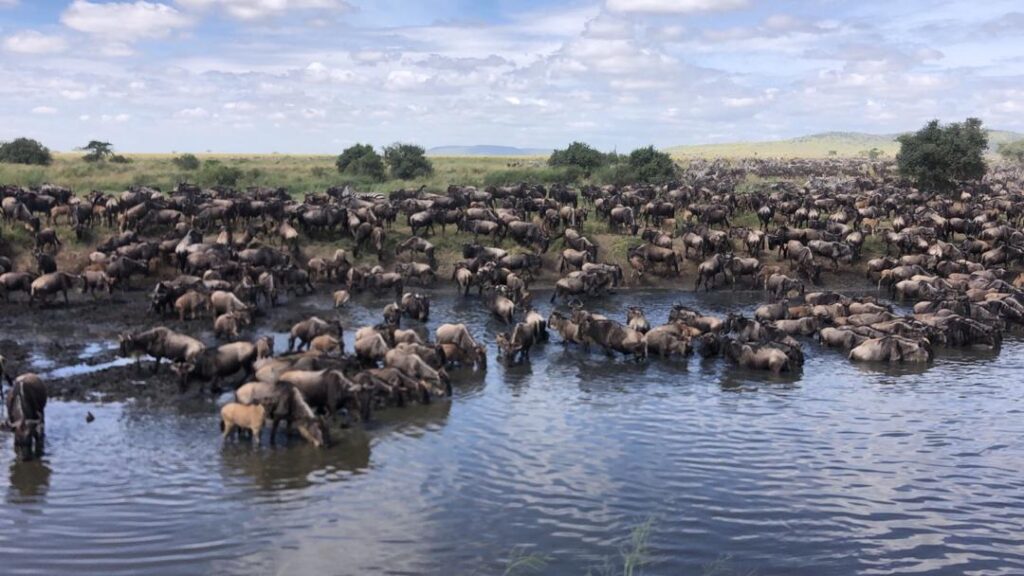
Every year, approximately 1.5 million wildebeests, accompanied by hundreds of thousands of zebras and gazelles, move across the Serengeti-Mara ecosystem in search of fresh grazing and water.
This continuous movement is influenced by seasonal rainfall and the availability of grass, meaning the animals do not follow an exact calendar.
However, certain periods provide better opportunities to witness specific migration experiences.
Serengeti is the main destination for experiencing the migration throughout much of the year.
Some of the important migration periods include:
Serengeti provides opportunities to experience different stages of the migration depending on when and where you visit.
Masai Mara is particularly famous for the dramatic Mara River crossings, which generally take place between July and October.
During this period, large herds of wildebeests and zebras move northwards from Serengeti into Kenya’s Masai Mara in search of fresh grazing.
The river crossings can be spectacular, with animals gathering along the riverbanks before attempting to cross waters inhabited by crocodiles.
However, crossings are unpredictable. Herds may spend hours or even days near the river before attempting to cross, and not every safari will witness one.
The Mara also offers excellent wildlife viewing outside the migration season because many resident animals remain in the ecosystem throughout the year.
Which is better for the Great Migration?
Serengeti is better for travellers who want to experience different stages of the annual migration, including the calving season and western corridor movements.
Masai Mara is particularly attractive for travellers whose main goal is to witness the dramatic Mara River crossings.
For the most rewarding experience, plan your safari according to the expected location of the migrating herds rather than relying only on fixed dates.
The Big Five refers to five iconic African mammals: lions, leopards, elephants, buffaloes and rhinoceroses.
Both Masai Mara and Serengeti offer opportunities to see these animals, although their populations and visibility differ.
Masai Mara is particularly famous for its lions, leopards and elephants. Buffaloes are also regularly encountered, while black rhinos are present but more difficult to spot.
Serengeti also supports all five species. Lions, leopards, elephants and buffaloes are relatively common in suitable habitats, while black rhinos are rare and generally associated with protected areas in the eastern Serengeti.
For travellers interested in seeing the Big Five, both destinations are excellent choices. However, sightings are never guaranteed, particularly when it comes to rhinoceroses.
If seeing a black rhino is a priority, consider including Ngorongoro Crater in your Tanzania safari itinerary.
Although both destinations are famous for their open grasslands, their landscapes have distinctive characteristics.
Masai Mara is characterised by rolling savannah grasslands, scattered acacia trees, seasonal rivers and picturesque hills.
The open plains provide beautiful photographic opportunities, especially when large herds of wildebeests and zebras move across the landscape.
The Mara River and its surrounding vegetation create another distinctive environment, supporting hippos, crocodiles, elephants and various bird species.
Beyond the main reserve, the surrounding community conservancies offer additional wilderness landscapes and opportunities for different safari activities.
Serengeti is famous for its enormous grasslands and seemingly endless horizons.
Its landscape includes open savannah, rocky kopjes, woodland areas, seasonal rivers and large grass-covered plains.
The central Serengeti features spectacular granite outcrops that provide resting places for lions and other wildlife.
The northern region is characterised by rolling hills and riverine vegetation, while the southern plains offer extensive open grasslands that support large herds during the calving season.
Which has better scenery?
Both destinations offer spectacular African landscapes. Masai Mara is particularly attractive for its rolling grasslands and river systems, while Serengeti provides greater landscape diversity because of its enormous geographical size.
Both destinations offer traditional game drives, but there are differences in the additional activities available.
Both destinations offer excellent safari activities, although some experiences, particularly walking safaris and night drives, depend on the specific protected area and its regulations.
Both Masai Mara and Serengeti offer a wide selection of accommodation, ranging from comfortable tented camps to exclusive luxury safari lodges.
Masai Mara offers accommodation inside the national reserve and in the surrounding private and community conservancies.
Visitors can choose from luxury lodges, permanent tented camps, seasonal camps and exclusive safari properties.
Staying inside the reserve provides convenient access to wildlife-viewing areas, while conservancy accommodation offers additional experiences depending on the location and applicable regulations.
Serengeti has a wider geographical distribution of safari camps and lodges.
Options include luxury lodges, permanent tented camps and seasonal mobile camps positioned according to the Great Migration.
The location of your accommodation is particularly important. Central Serengeti is popular for year-round wildlife viewing, while northern and southern camps are often selected according to seasonal migration movements.
Which is better for luxury accommodation?
Both destinations offer outstanding luxury safari accommodation. Serengeti provides a particularly wide range of properties spread across different regions, while Masai Mara has excellent luxury camps and exclusive conservancy accommodation.
Both destinations can be visited throughout the year. However, your preferred wildlife experience should determine the best time to travel.
July to October is generally the most popular period for visiting Masai Mara, particularly for travellers hoping to witness the Great Wildebeest Migration and Mara River crossings.
January to March is another excellent period for wildlife viewing, with generally favourable conditions and fewer migration-related crowds.
The green season also offers beautiful scenery, although rainfall can make some roads more challenging.
Serengeti offers excellent wildlife experiences throughout the year, but the best time depends on the region and your interests.
For both destinations, migration movements are influenced by rainfall and grazing conditions, so the timing can vary from one year to another.
Masai Mara and Serengeti are both accessible through established safari transport networks, but they are located in different countries.
Most visitors travel from Nairobi, Kenya’s capital, to Masai Mara.
The journey by road generally takes between five and six hours, depending on the selected gate, road conditions and accommodation location.
Domestic flights are also available from Nairobi to several airstrips serving the Masai Mara region, making fly-in safaris a convenient option.
Most Tanzania safaris begin in Arusha, the main gateway to the Northern Safari Circuit.
Serengeti can be reached by road, with journey times varying according to the region being visited. Visitors can also take domestic flights from Arusha or other safari destinations to selected airstrips within the park.
For travellers planning a longer Northern Circuit safari, Serengeti is commonly combined with Tarangire National Park, Ngorongoro Crater and Lake Manyara National Park.
The cost of visiting either destination depends on several factors, including accommodation standards, travel season, transport, park-related fees and the number of days spent on safari.
Masai Mara can be attractive for shorter safari itineraries because of its relatively compact size and convenient access from Nairobi.
Serengeti safaris may require more time and transportation, particularly when exploring distant regions such as the northern or southern plains.
However, neither destination is automatically cheaper. Luxury accommodation in both places can be expensive, especially during peak migration periods.
The best approach is to compare complete safari packages, including accommodation, transportation, meals, park fees and activities.
For travellers considering both Kenya and Tanzania, a combined itinerary may also be worth exploring.
The best destination depends on what you want from your African safari.
Choose Masai Mara if:
Choose Serengeti if:
For travellers with enough time and budget, visiting both destinations offers one of the most rewarding safari experiences in East Africa.
Yes. It is possible to combine Masai Mara and Serengeti in one East African safari.
Because the two destinations are part of the same greater ecosystem, a combined itinerary provides an opportunity to experience different sections of the Great Wildebeest Migration and explore two of Africa’s most famous wildlife destinations.
For example, a seven-day safari could include:
This is a simplified example. Actual itineraries depend on border crossing arrangements, immigration requirements, road conditions and the location of the migration herds.
An alternative is to fly between selected airstrips, depending on available flight connections and border procedures.
For travellers interested in a more extensive experience, consider a 10–14-day Kenya and Tanzania safari that includes additional wildlife destinations.
Neither destination is universally better. Masai Mara is particularly famous for its concentrated wildlife and Mara River crossings, while Serengeti offers a larger wilderness area, diverse habitats and opportunities to experience different stages of the Great Migration.
Both destinations are important parts of the Great Migration ecosystem. Serengeti offers opportunities to witness calving, herd movements and different seasonal stages, while Masai Mara is particularly famous for the Mara River crossings between July and October.
Yes. Serengeti National Park covers approximately 14,750 square kilometres, while Masai Mara National Reserve covers approximately 1,510 square kilometres. Serengeti is therefore considerably larger.
Yes. Both destinations support lions, leopards, elephants, buffaloes and rhinoceroses. However, rhinoceros sightings are less predictable than encounters with the other Big Five animals.
We recommend spending at least two to three days in Masai Mara. Three to four days or longer is ideal for exploring different areas and allowing more time for wildlife viewing.
We recommend spending at least three days in Serengeti. Four to six days or longer is ideal for exploring different regions and experiencing seasonal wildlife movements.
Yes. A combined Kenya and Tanzania safari allows you to explore both destinations. However, you should plan the itinerary carefully, considering border crossings, transportation and the time needed in each park.
Both destinations offer excellent lion-viewing opportunities. Masai Mara is famous for its lion populations and open grasslands, while Serengeti has extensive lion territories and excellent viewing opportunities, particularly in the central region.
No. Masai Mara is in Kenya, while Serengeti National Park is in Tanzania. However, both form part of the greater Serengeti-Mara ecosystem, which supports the annual wildebeest migration.
Both offer exceptional luxury safari experiences. Serengeti has a wide selection of luxury lodges and mobile tented camps across different regions, while Masai Mara offers exclusive luxury camps and private conservancy experiences.
Masai Mara and Serengeti are two of Africa’s most extraordinary wildlife destinations, each offering a unique way to experience the continent’s wilderness.
Whether you want to witness the dramatic Mara River crossings, explore the endless Serengeti plains, photograph Africa’s big cats or follow the Great Wildebeest Migration, choosing the right destination and travel season will make a significant difference to your safari.
For travellers interested in experiencing Tanzania, Serengeti offers an exceptional opportunity to explore a vast wilderness while combining your safari with other remarkable destinations such as Ngorongoro Crater, Tarangire and Lake Manyara.
At Afrima Luxury Safaris, we organise personalised Tanzania safari experiences designed around your interests, travel dates, accommodation preferences and budget.
Whether you are planning a private luxury safari, a Great Migration adventure or a longer Northern Tanzania safari, we can help you create an unforgettable experience.
Explore our [Tanzania safari packages] or contact Afrima Luxury Safaris to start planning your African safari.
There are no results matching your search
WhatsApp us